24-hour phone response · Private wildlife service 610-522-1113

Raccoon removal in Delaware County

Raccoon removal

Humane help for raccoons in attics, chimneys, crawl spaces and structures.

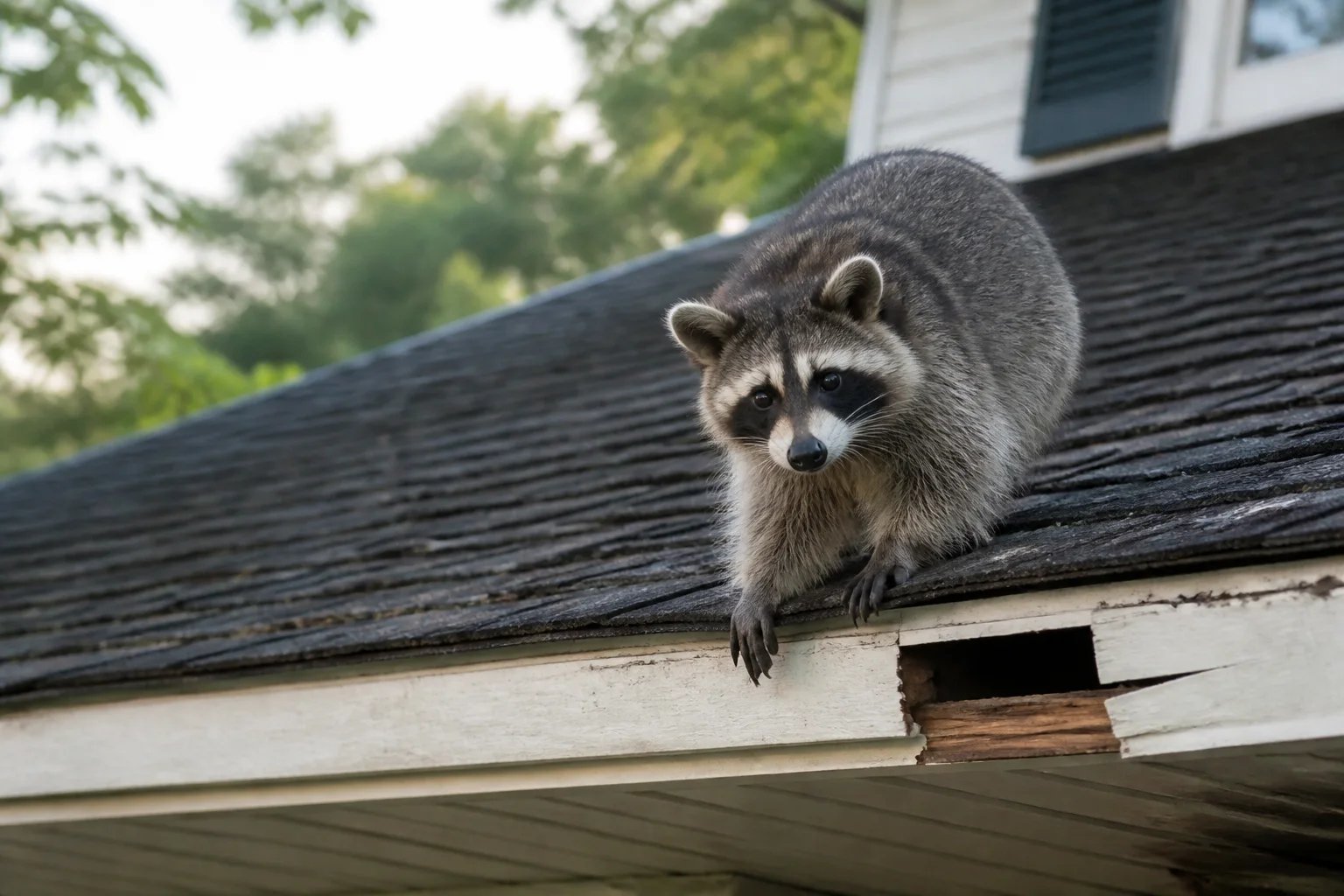
Raccoon beside a damaged soffit opening on a residential roof
Inspection · Removal · Exclusion · Repair
04

common signs to describe when you call

Understand the whole problem

Do not stop at the first visible sign.

Raccoons are strong enough to enlarge weak roof and soffit openings. Once inside, they can damage insulation, ductwork and stored materials.

The inspection checks for active entry points, young animals and secondary damage before a removal and prevention plan is recommended.
Signs to mention when you call

The pattern helps identify the right response.

  • Heavy movement at night
  • Torn shingles or soffit panels
  • Tracks or overturned containers
  • Large droppings near a repeated path

The scope

What we inspect and what the job may include.

What we inspect

  1. 01

    Heavy nighttime travel paths across roofs, decks or yards

  2. 02

    Torn soffits, roof edges, vents and chimney access

  3. 03

    Signs of a den or young animals in an attic or chimney

  4. 04

    Insulation, ductwork and stored items near the active area

What the work may include

  1. 01

    Confirming the active raccoon route

  2. 02

    A removal plan that accounts for dependent young

  3. 03

    Checking for secondary openings and interior damage

  4. 04

    Repair or exclusion recommendations after activity is resolved

Price and timing

What shapes the scope of work.

Raccoon work depends heavily on den location and whether young animals are present. Those facts must be established before an opening is closed.

01

Whether the raccoon is outdoors, in a chimney or inside the structure

02

The presence and location of young animals

03

Roof height and access conditions

04

Damage, cleanup and repair needed after removal

What happens next

Remove the animal. Deal with the way it got in.

01

Inspect the whole entry path

We look beyond the animal itself to locate entry points, nesting areas and the conditions that made the property accessible.

02

Remove the immediate problem

The response is matched to the species, location and condition of the property instead of treating every call like the same job.

03

Close the route back in

Where appropriate, exclusion and repair work addresses the openings and damage that would otherwise invite the problem back.

Questions people ask

What to know about raccoon removal.

Why do I hear the raccoon mostly at night?+

Raccoons are commonly active after dark. Heavy footsteps, rolling sounds or movement near a roof edge can help narrow the likely route.

What if there are babies in the attic?+

The removal plan must account for the whole family. Closing the opening before that is established can separate or trap animals.

Can raccoon damage be repaired?+

Many torn soffits, vents and roof-edge openings can be repaired or excluded after the active animals are resolved.

Request help

Tell us what is happening.

Send the animal or problem, your ZIP code and the best number to call. For immediate help, call directly.

Call directly610-522-1113
Call instead